I've watched founders — and been one — pour months into docs, SDKs, and onboarding, then wait for the market to notice. Founders justify the wait with reasons that sound right: developers hate ads, good products spread on their own, GitHub rewards quality with visibility. Each belief used to hold up. None hold up now.
Good developer experience keeps developers who already found the product. It doesn't get them found in the first place. That gap explains why devtools founders spend years solving the wrong problem.
Myth 1: Just do great DX and developers will come
Investing in developer experience buys retention. A frictionless SDK keeps a developer who already tried the tool. It does nothing for the ten thousand who never heard the tool exists. Founders conflate the two because DX work is visible and within their control — there's always another onboarding flow to polish. Awareness doesn't respond to that kind of iteration. It needs its own budget and its own channel as a separate line item from the roadmap.
Myth 2: Good products spread on their own
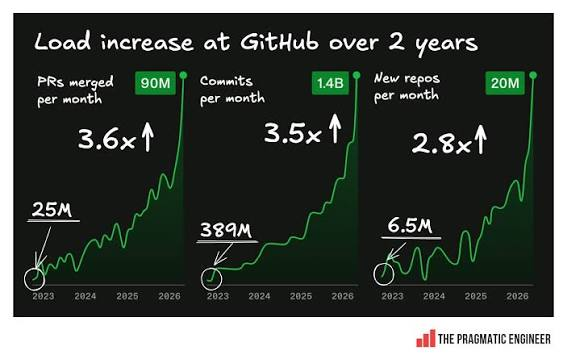
GitHub, Hacker News, and Twitter are too noisy now for posting-and-waiting to work. Posting and waiting stopped working because the feed got too loud to reward quality alone. GitHub, Hacker News, and Twitter used to surface good work because little competed for attention. AI-assisted shipping changed that math: more repos, more launches, more "Show HN" posts than any human feed can sort through in a day. Standing out organically now means outcompeting volume as well as quality, and volume wins more often than founders want to admit.
Myth 3: Devtools don't do paid ads
Developers register ads the same way everyone else does: subconsciously, without becoming a customer on contact. Seeing a brand once files it away in memory. The payoff shows up later, when that developer hits the problem the product solves, and the name is one of two or three they recognize. You've lived this yourself: nobody buys a monitoring tool the day they see the ad, but when the pager goes off at 3 a.m., they reach for a name they recognize. That's the mechanism. The ad's job is to build recognition before the moment arrives.
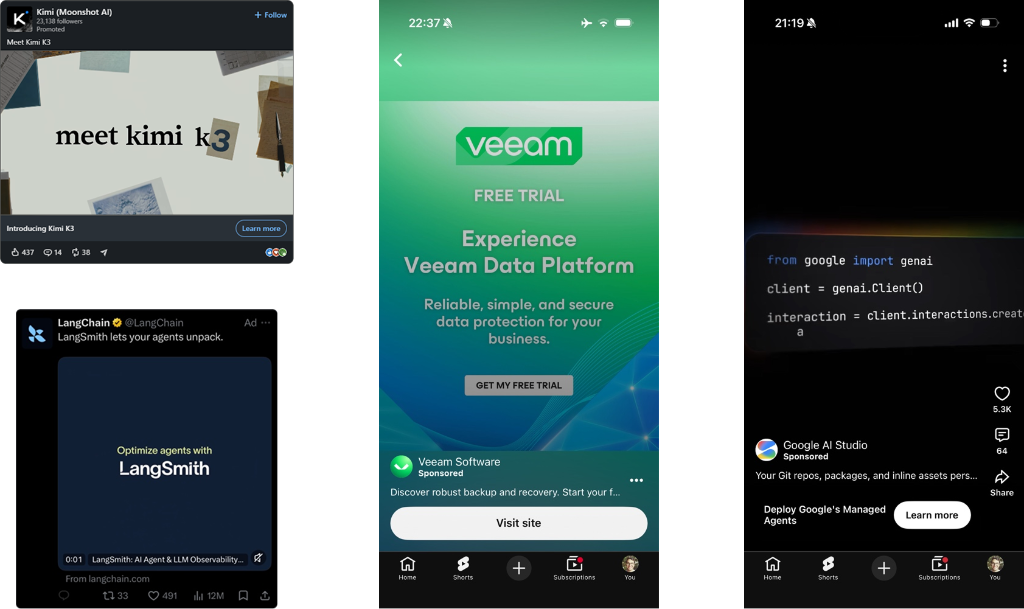
"Devtools companies don't run paid ads" is a myth. Founders aren't looking for the evidence. Datadog runs LinkedIn campaigns catalogued in public ad libraries. Postman put budget behind branded video ads that pulled millions of views. Supabase runs ads across multiple platforms, including formats you wouldn't expect from a devtools company, like Reddit placements. The belief that devtools companies grow organically survives because ad spend isn't advertised the way product is — nobody puts "we run paid ads" in a launch post.
Awareness Is Engineered
Every myth above shares one root cause. Each treats awareness as something that arrives through good DX, a viral post, or word of mouth. Awareness works as a system with inputs: a channel, a budget, and a target.
A job title makes a weak target. "Software developer" describes an engineer at Supabase and an engineer at a two-person open source project with the same label. Only one of them has a documented reason to care about a new API management tool today. Budget size doesn't decide whether an ad lands. Audience relevance does. Building that audience is a targeting problem. It has a solution.
Ads fill a specific gap: getting in front of developers who have never heard of the product. Product work and community earn trust once that first contact happens. Neither one creates the contact itself. Running paid ads for devtools doesn't replace either. It fills the piece both are missing. The next post covers how to build an audience that already has a reason to care.